Psychotherapy
Psychotherapy, or "talk therapy," is a form of treatment that starts with an exploration of current emotional problems. Treatment progresses to include a personal history, and once the issues are clearly understood, the therapist proceeds to a more active treatment phase.
Cognitive Behavioral Therapy (CBT)
CBT is a very popular type of psychotherapy based on the idea that feelings and behaviors are determined by our thoughts. If we think gloomy thoughts, we feel down and depressed; if we think something terrible is about to happen, we feel anxious, fearful and worried. CBT helps patients identify and change negative or unreasonable self-talk.
When patients are suffering from severe depression or anxiety, they often lack the motivation — and ability — to read a full book about CBT. Recommending books early in illness is usually a waste of time. Dr. Berber wrote "Psychotherapy: A Cognitive Approach" to provide a short but effective guide that wouldn't overwhelm patients as they struggled with depression and/or anxiety. Recommended by the late Dr. Albert Ellis, one of CBT's original founders, and free to download.
Dialectical Behavior Therapy (DBT)
DBT is a type of CBT developed to help patients overcome Borderline Personality Disorder. It focuses on "emotional regulation," helping patients — often in their teens — manage intense feelings and emotions. It may be difficult to find therapists well versed in DBT; "The Dialectical Behavior Therapy Skills Workbook" by McKay, Wood & Brantley is a great first step.
Behavioural Activation Therapy (BAT)
By changing behaviour, BAT changes thoughts and feelings in a positive way. Enjoyable activities are encouraged and effects are monitored. In BAT, the initial focus is on behaviours, while in CBT the initial focus is on thoughts.
BounceBack
A free skill-building program from the Canadian Mental Health Association (CMHA), designed to help adults and youth 15+ manage low mood, mild to moderate depression, anxiety, stress, or worry.
Stress
Stress is the physical or psychological response to an event or stressor considered threatening or challenging. A certain amount (good stress) motivates and energizes individuals, while excessive, prolonged stress results in anxiety and a feeling of being overwhelmed. In 1967, two psychiatrists developed a scale to assess the impact of life events — some items are less relevant today than they were then.
Happiness
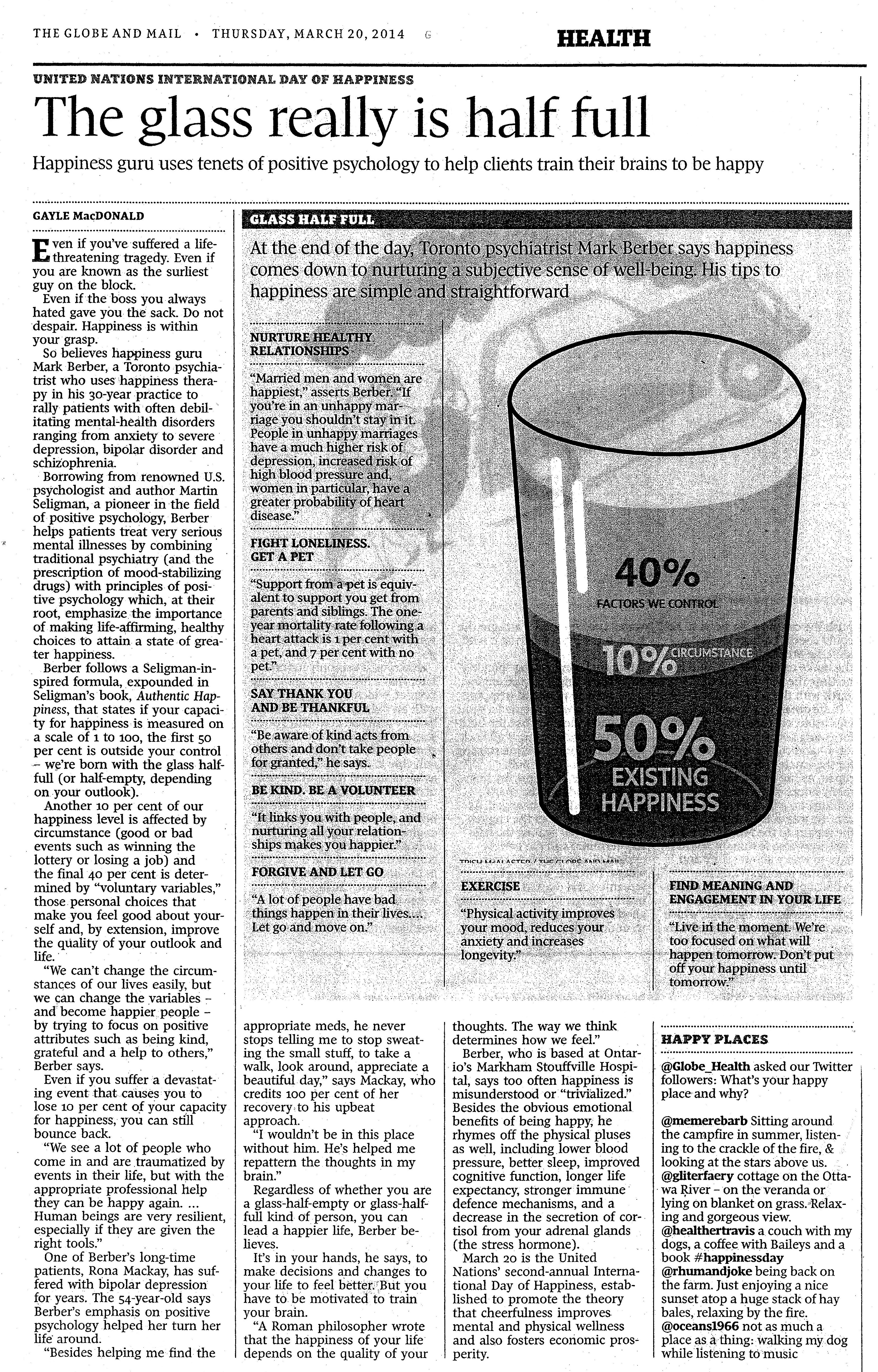
The practice of psychiatry involves not only the diagnosis and treatment of mental illnesses but also exploring, with patients, concepts such as happiness.
Relaxation Therapy & Mindfulness — "Creating Inner Calm"
An audio program designed to relieve stress, anxiety and insomnia. The compact disc version was a Canadian best-seller and is now available online. Three separate but complementary exercises: "Conscious Breathing" helps you relax by focusing on and controlling your breath; "Full Release" relaxes your entire body (and hopefully your mind) through muscle tension and release sequences; "Imagine" combines controlled breathing, muscle relaxation, and creative visualization.