Anxiety Disorders
Anxiety is a normal part of everyday life, but when it becomes intense and persistent and interferes with your functioning, you may be suffering with an anxiety disorder. There are several types, including Generalized Anxiety, Social Anxiety, Panic Disorder, and OCD. Treatment includes education, psychotherapy, medication, and lifestyle changes. Relaxation therapy, mindfulness, and focusing on and slowing down breathing can reduce anxiety and prevent panic attacks.
Recommended reading: The Anxiety & Phobia Workbook by Edmund J. Bourne, for patients suffering from any type of anxiety disorder. For therapists and physicians wishing to understand the neurobiology of anxiety and fear: The Emotional Brain by Joseph LeDoux.
Panic Disorder
Panic Disorder features at least one panic attack followed by: (1) concern about more attacks, (2) concern about the consequences of attacks (e.g. heart attack), and (3) a change in behavior related to the attacks (e.g. refusal to go to the mall).
A panic attack is a clear-cut period of intense fear or discomfort in which 4 or more of 13 symptoms develop abruptly, reaching a peak within 10 minutes.
- S Sweating
- T Trembling
- U Unsteadiness
- D Depersonalization
- E Excessive heart rate (palpitations)
- N Nausea
- T Tingling
- S Shortness of breath (or smothering)
- F Fear of losing control or going crazy
- F Fear of dying
- C Chills (or hot flushes)
- C Chest pain
- C Choking
Treatments include CBT, relaxation and breathing techniques, and various medications — see the Psychotherapy page for downloadable resources.
Generalized Anxiety Disorder (GAD)
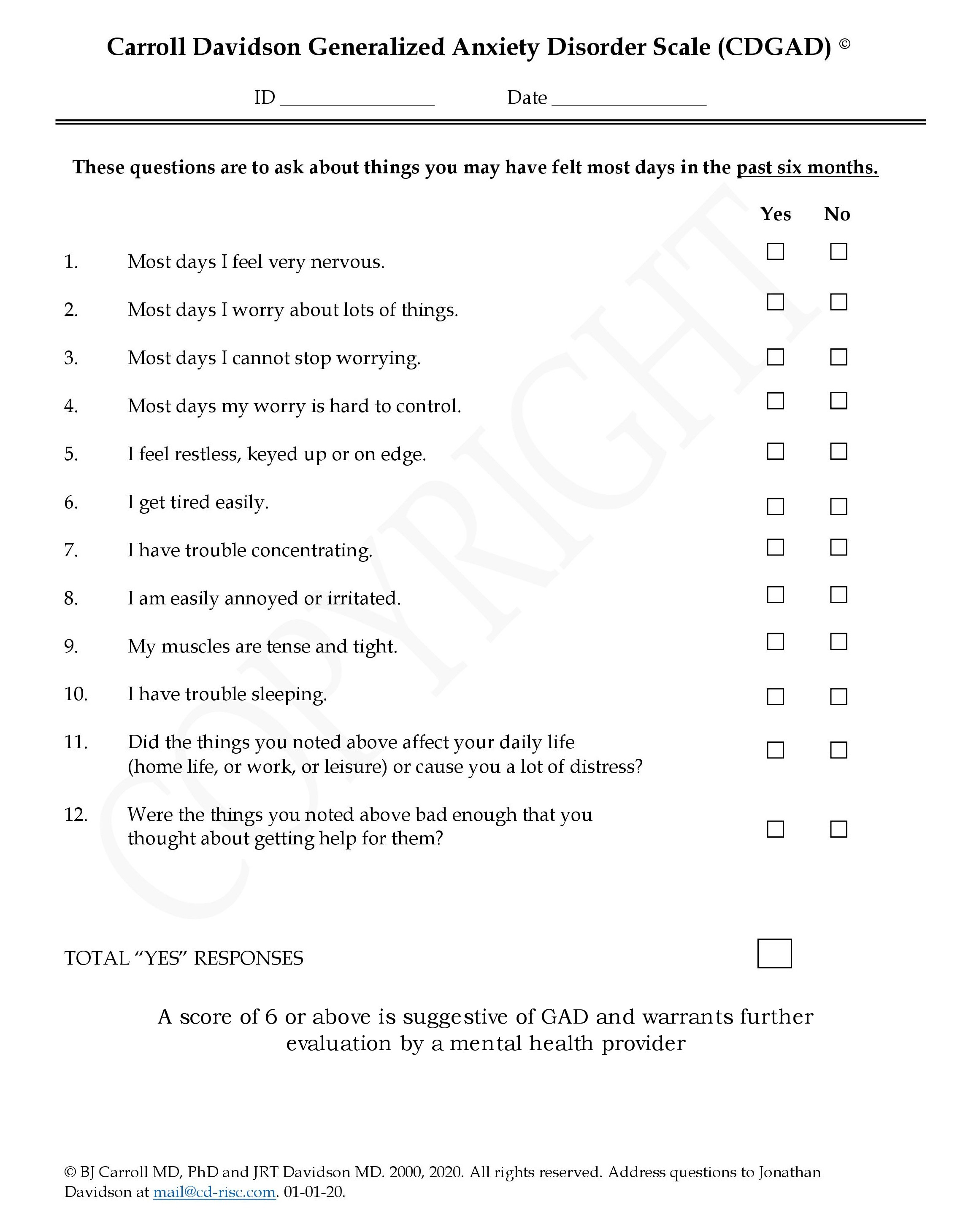
9% of people will develop GAD during their lifetime. The essential feature is excessive worry and anxiety about a number of events or activities. GAD is diagnosed when there are 3 or more of 6 symptoms in addition to the core worry and anxiety.
- W Worry and anxiety for at least 6 months with impaired function
- T Tension in neck & shoulder muscles
- C Concentration problems (mind goes blank)
- H Hyper-agitation (irritability)
- E Energy loss (or fatigue)
- R Restlessness (feeling on edge)
- S Sleep disturbance (insomnia)
Post-Traumatic Stress Disorder (PTSD)
- T Traumatic event — associated with helplessness, fear & horror
- R Re-experiencing the trauma — flashbacks, nightmares
- A Avoidance of anything associated with the trauma
- U Unable to function (socially, occupationally, interpersonally)
- M Month or more of symptoms
- A Arousal is increased — hypervigilance, startle reaction, irritability
The Primary Care PTSD Screen for DSM-5 (PC-PTSD-5) is a 5-item screen designed to identify probable PTSD in primary care (family practice) settings.
Social Anxiety Disorder
A common condition with onset between 8 and 15 years in 75% of cases.
Treatment includes Cognitive Behavioral Therapy (CBT). "The Shyness & Social Anxiety Workbook" by Antony & Swinson is an excellent starting point and is recommended to all patients with Social Anxiety Disorder.